

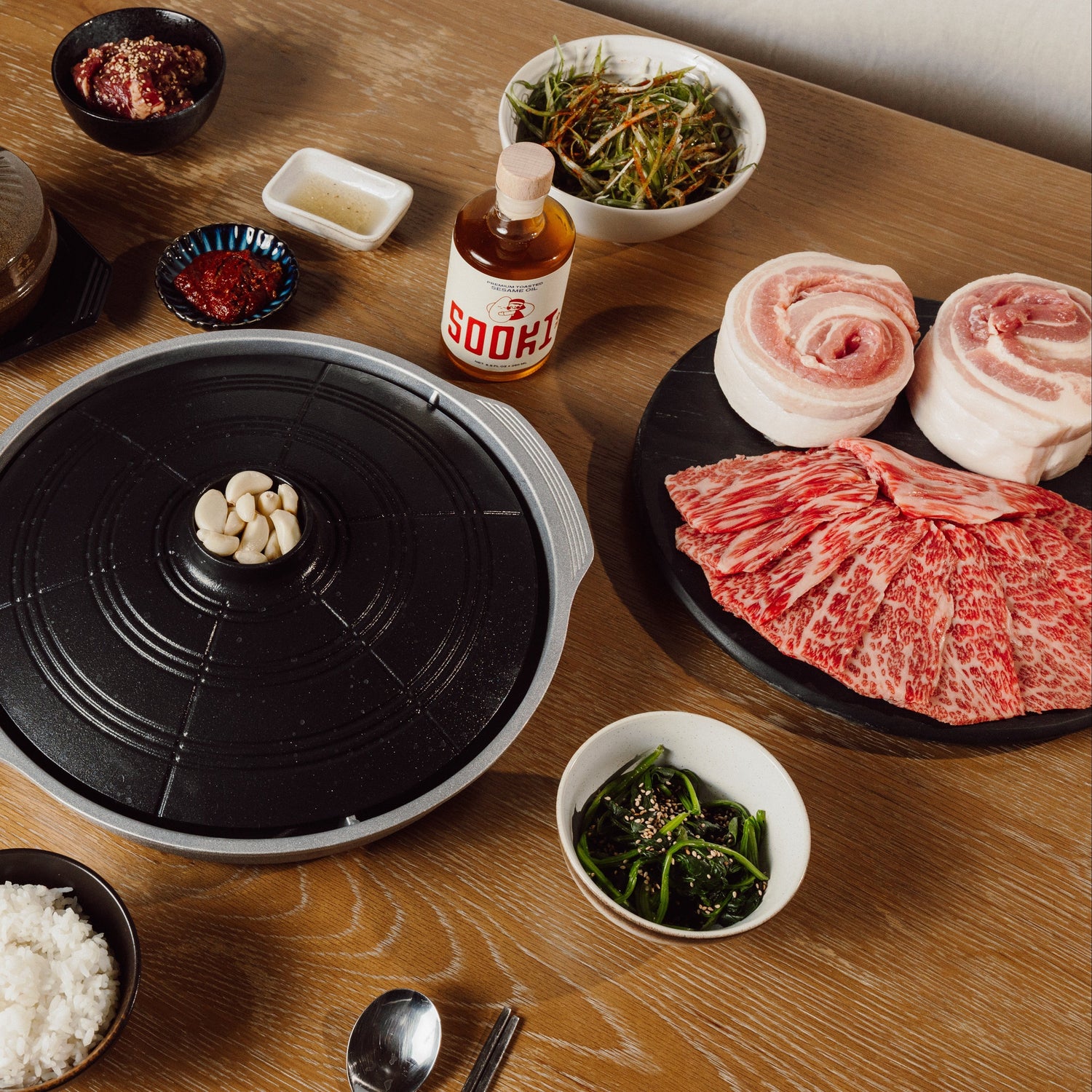
Most people don’t cook with a recipe every day. They open the fridge, scan what’s inside, and build something from memory — or maybe just hunger. It’s the kind of cooking that happens on busy nights, in quiet moments, or when you’re simply trying to use what you have. Korean cooking, at its core, was made for that.
Long before measurements and recipe cards, Korean home kitchens moved by instinct. The cooking was improvisational but deeply rooted in balance — the salt of soy sauce, the richness of sesame oil, the fire of chili, the brightness of scallion or vinegar. These weren’t ingredients chosen for novelty; they were chosen because they carried the weight of flavor on their own. Together, they could transform a single bowl of rice or a handful of vegetables into something complete.
That’s the quiet magic of Korean flavor. It isn’t about a single dish or technique, but about harmony — the way salty meets nutty, spicy meets sweet, sharp meets mellow. A drizzle of sesame oil can smooth the edges of something acidic. A spoon of gochugaru (Korean chili powder) can lift a neutral broth. Soy sauce can season without shouting. Garlic, when tempered in oil, can deepen almost anything it touches. The power lies not in precision, but in proportion.
There’s a saying in Korean homes that recipes are guidelines, not rules. The same handful of ingredients can become a marinade, a dipping sauce, or a dressing, depending on how you tilt the balance. Combine sesame oil, soy sauce, and garlic — that’s the base for namul (seasoned vegetables). Add a touch of vinegar and sugar, and you have something bright enough for cucumbers or greens. Add gochugaru, and you’ve crossed into kimchi territory. The ratios change with mood, season, and what’s on hand.
Cooking this way invites you to slow down and pay attention. You learn by tasting. Add too much soy sauce and you taste salt more than flavor; next time, you know. Forget sesame oil, and you realize what richness feels like when it’s missing. With time, your hands remember. Korean mothers and grandmothers rarely measured, but they cooked with absolute confidence — not because they knew numbers, but because they knew how the food should feel.
The beauty of bringing this mindset into an everyday kitchen is that it frees you from the anxiety of exactness. You don’t need a recipe to make something taste deeply satisfying. You just need a few essential ingredients that know how to speak to one another — and a willingness to listen as they do.
A drizzle of toasted sesame oil, especially, does more than flavor. It ties things together. In a warm bowl of rice, it creates silkiness; over roasted vegetables, it draws out sweetness; in a dressing, it lingers at the back of the tongue like a quiet echo. It’s the ingredient that tells you when something is finished — when a dish feels whole.
At Sooki Foods, we see Korean flavor not as a set of recipes but as a philosophy of care — one that values depth over excess, and presence over perfection. It’s the belief that a few honest ingredients, used thoughtfully, can turn everyday cooking into something meaningful. And once you start cooking that way — freely, intuitively, with a drizzle of something warm and fragrant — it’s hard to imagine doing it any other way.
