

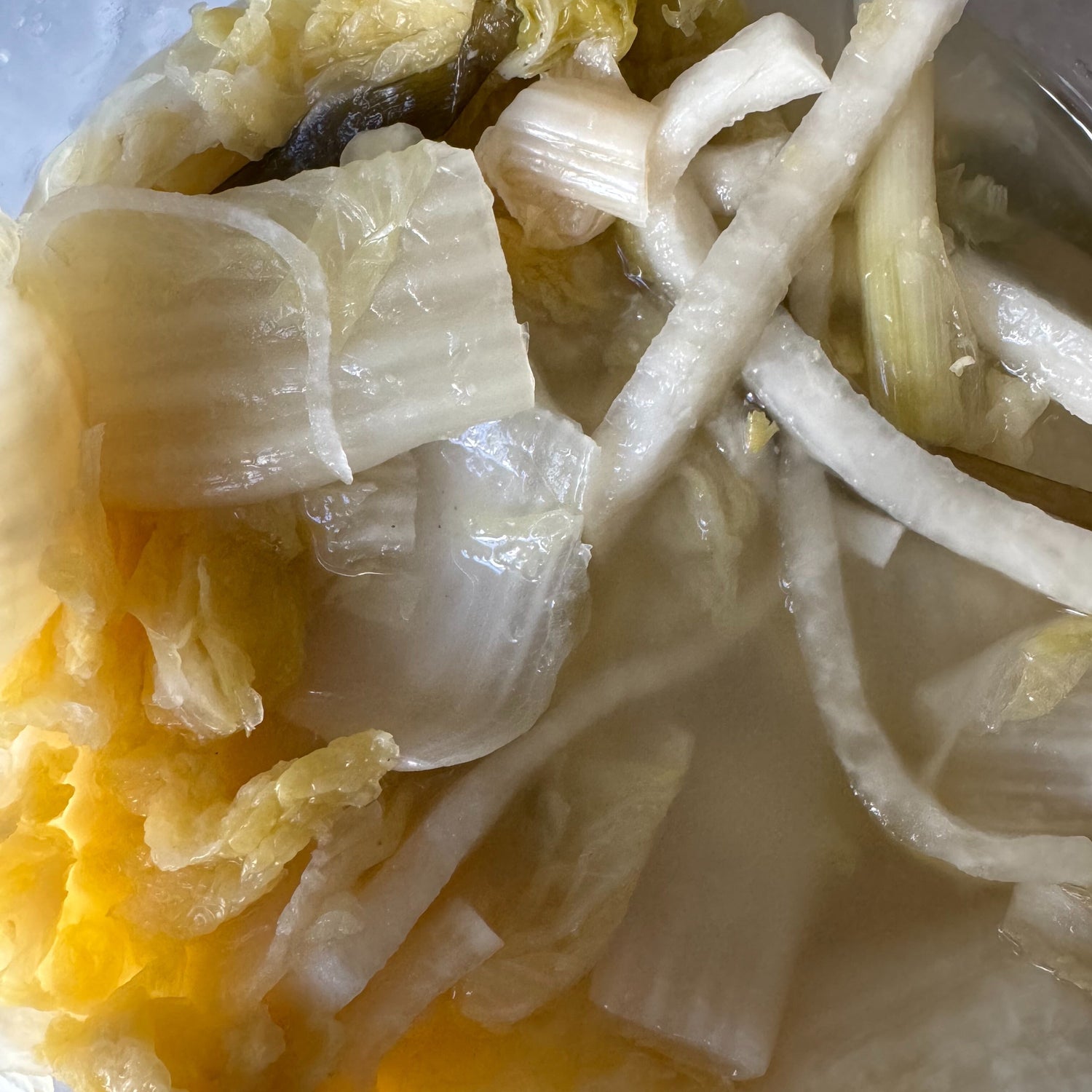
Korean food has a reputation for being bold — fiery red stews, sizzling barbecue, the unmistakable hit of garlic and chili. It’s an image that stuck, especially outside Korea, where “Korean flavor” has often been distilled into something loud and unmistakable. And yet, anyone who’s eaten in a Korean home, or spent time in a market or countryside restaurant, knows that some of the most moving Korean dishes whisper instead of shout.
There’s a quiet side to Korean cooking — one built on clarity, restraint, and a deep respect for ingredients. Think of pyeongyang naengmyeon, the buckwheat noodles served in cold, translucent broth. It’s a dish so understated that, at first, you might wonder where the flavor is. Then, as you keep tasting, it starts to unfold — the savory depth of beef and radish stock, the gentle tang of aged kimchi, the faint nuttiness of buckwheat. It’s a dish that asks for attention, not adrenaline. The pleasure is in how subtle everything feels, how time and patience replace spice as the defining note.
Or take baek kimchi, white kimchi, made without chili. It’s crisp and clean, fermented just enough to taste alive. You taste the cabbage itself — the sweetness of it — brightened by ginger, pear, and garlic. It’s proof that Korean food doesn’t need to be red or spicy to be expressive. The fermentation, not the seasoning, is what gives it character.
There are so many examples like these: the simplicity of a gently seasoned kongnamul-guk (soybean sprout soup), the almost meditative quiet of hobakjuk (pumpkin porridge), the earthy calm of namul vegetables dressed in sesame oil and salt. Each of these dishes relies on subtle calibration rather than bold seasoning. The flavors feel grounded, honest, unhurried.
This kind of cooking isn’t designed to impress quickly. It’s meant to linger — to reveal itself over time. And it reflects something essential about Korean food culture: that balance matters more than impact. That fermentation, aging, and texture can speak louder than spice. That comfort doesn’t always come from heat, but from harmony.
At Sooki Foods, we think about that often. Our sesame oil is roasted to bring out warmth and sweetness, not to overwhelm. It’s made to belong in those quieter dishes as much as in the assertive ones — to round out flavors, not to mask them. We believe subtlety is one of Korean cuisine’s greatest strengths, even if it’s the least understood.
In a world that celebrates intensity, subtle food can feel almost radical. It asks you to slow down, to pay attention, to taste what’s actually there. Korean cooking, at its best, teaches that lesson beautifully: that depth doesn’t have to be loud, and that sometimes the most memorable flavors are the ones that don’t try to be.
